


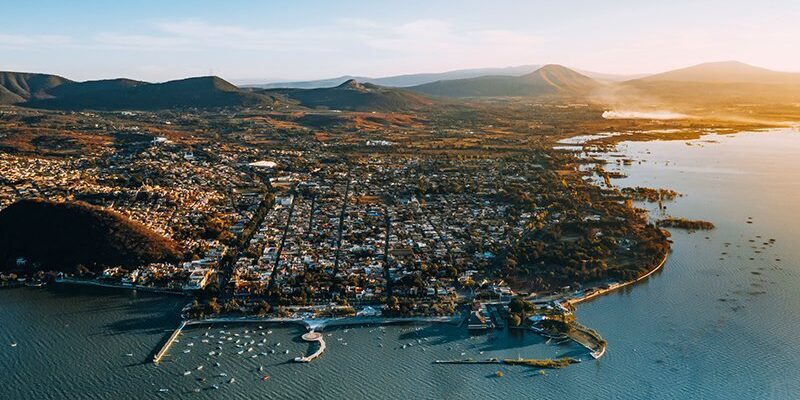
Lake Chapala is the easiest escape from the city. The north shore sits about 50 kilometers south of downtown Guadalajara, roughly 45 minutes to an hour by car when traffic cooperates, and buses leave all day. That makes Lake Chapala from Guadalajara a natural day trip: lunch on the water in Chapala, an afternoon walk through the cobblestone streets of Ajijic, and back in town for dinner.
It is also Mexico’s largest natural lake, at more than 1,100 square kilometers, and it supplies about 60 percent of the water used in the Guadalajara metro area. You will hear that at least once from a boat captain. This guide covers how to get there by car, bus or with a rental from the airport, what to see in each town, where the food is worth the detour, and when to go.
Lake Chapala from Guadalajara at a glance
Distance: about 50 km from downtown Guadalajara to the Chapala waterfront
Driving time: 45 minutes to 1 hour without traffic, via the Guadalajara–Chapala highway past the airport
Bus: Chapala Plus from the Antigua Central Camionera (old bus station), regular service roughly 5:35 to 21:50
Towns to combine: Chapala (waterfront and boats) and Ajijic (Pueblo Mágico, murals, restaurants), about 7 km apart
Best season: November to May, the dry months
Swimming: not recommended; head to the hot springs at San Juan Cosalá instead
How to get to Lake Chapala from Guadalajara
By car
Driving gives you the most freedom, and the route is simple. From the south of the city you pick up the Guadalajara–Chapala highway, which runs past Guadalajara International Airport and then straight south through farmland and low hills until it drops down to the lake. At the end of the highway, turn left for Chapala or right for Ajijic, San Juan Cosalá and Jocotepec.
The stretch near the airport is the slow part. Local traffic reports through 2026 have flagged lane closures for roadworks around kilometers 3 and 4 and heavy congestion near the industrial parks of Tlajomulco, mostly at rush hour. Leave early on weekends, too: the Sunday afternoon drive back to Guadalajara is the one everybody complains about.
Since the airport is on the way, a rental makes sense if you are flying in. Veico has its office at Guadalajara airport, so you can pick up the car after landing and be on the lakeshore in well under an hour. Rentals require a credit card, and every booking is guaranteed with a deposit when you reserve; the balance is paid when you pick up the car.
By bus
Chapala Plus runs the route from the Antigua Central Camionera, the old bus station on Dr. R. Michel, close to downtown. Do not confuse it with the Nueva Central in Tlaquepaque, where long-distance buses leave. There is a direct service and a regular one that stops along the highway; the regular buses to Chapala and Ajijic run from about 5:35 to 21:50, according to the company’s schedule page, and the last return trips leave the lake around 21:30. Tickets are bought at the window and cost around 80 pesos (MXN) one way. The schedule page also lists an airport route, handy if you land and want to go straight to the lake.
Schedules change, so check chapalaplus.com before you go. To get to the old bus station, a taxi or ride-hailing app from most central neighborhoods is quick; our guide to public transportation in Guadalajara explains the alternatives.
Tours and private drivers
Several operators in Guadalajara sell one-day tours that combine Chapala, Ajijic and a boat ride. They save you the logistics but give you little control over how long you stay in each place. A private driver for the day is the middle ground if you are a group and nobody wants to drive back.
Getting there, the short version
Car: Guadalajara–Chapala highway, past the airport; allow extra time near kilometers 3 to 10 at rush hour
Rental: pick up at Guadalajara airport, which is already on the way to the lake
Bus: Chapala Plus, Antigua Central Camionera, Dr. R. Michel 275; about MXN 80 one way
Return: last regular buses leave the lake around 21:30; confirm on the day
What to see in Chapala
Chapala is the working town of the lakeshore: municipal seat, weekend crowds from Guadalajara, vendors selling nieves and fried fish along the water. It was a resort for the Guadalajara elite at the start of the twentieth century, and the villas from that period still line the streets behind the waterfront. D.H. Lawrence spent part of 1923 here and started writing The Plumed Serpent during his stay.
The malecón
The waterfront promenade is where almost everyone starts. It is wide, flat and good for a slow walk, with the pier at one end and food stalls along the way. Late afternoon is the best time, when the light softens over the water and the mountains on the south shore turn blue.
Boat rides and the islands
Boats leave from the Chapala pier. The usual trip goes to Isla de los Alacranes, a small island with simple restaurants and a site that is sacred to the Wixárika (Huichol) people. Prices are per boat, not per person, and are agreed at the dock, so it pays to fill a boat with your group and to settle the price and the waiting time on the island before you board.
Isla de Mezcala, farther east, carries more history. Insurgents held out there against Spanish forces from 1812 to 1816, and the ruins of the fort and the later prison are still standing. It is reached from the village of Mezcala rather than from Chapala, so plan it as a separate outing.
The old train station and the town center
The Chapala train station opened in 1920, when Guadalajara families came down by rail for the weekend. Today it is the Centro Cultural González Gallo, with exhibitions and a pleasant garden. A few blocks away is the Parroquia de San Francisco de Asís, the main church, an easy stop between the waterfront and lunch.
Related articles: Hiking near Guadalajara: trails on the Chapala shore, including El Tepalo | Tapalpa: the mountain town for your next weekend away
What to see in Ajijic
Seven kilometers west of Chapala, Ajijic is smaller, prettier and a lot more international. It was declared a Pueblo Mágico in December 2020, and it has one of the largest communities of American and Canadian retirees in Mexico; the Lake Chapala Society, founded in 1955, is still the social hub for many of them. The result is a village where you hear as much English as Spanish, with galleries, cafés and some of the best restaurants on the lake.
- The murals. Walls all over the center are painted, and the densest stretch is around Morelos, Colón and 16 de Septiembre streets. Just walk.
- The plaza and the church of San Andrés. The heart of the village, busy in the evening and during the November fiestas of the patron saint.
- The Ajijic malecón. About two kilometers of path along the water, quieter than Chapala’s and good for a walk or a bike ride.
- The Wednesday tianguis. The weekly street market, with produce, crafts and food. If your dates are flexible, this is a good reason to go midweek.
- El Tepalo. A trail that climbs from the upper edge of the village to a waterfall that only flows in the rainy season. Start early; there is little shade.
Beyond Chapala and Ajijic
If you have a car and a full day, keep going west. San Juan Cosalá, a few minutes past Ajijic, is known for its thermal water, with balnearios where the pools are naturally warm. This is the place to swim, since the lake itself is not. At the western tip of the lake, Jocotepec is a quieter town with a lakeside walk of its own.
Between October and April, thousands of American white pelicans spend the winter on the Michoacán side of the lake, especially around Petatán, in the municipality of Cojumatlán de Régules. It is a long way around from Chapala and works better as its own trip, but if you are visiting in winter it is worth knowing about.
What to eat at Lake Chapala
Lake food is fish food. On the Chapala waterfront and in the fondas of the towns along the shore, look for:
- Charales, tiny lake fish fried crisp and eaten whole with lime and salsa, usually as a snack with a beer.
- Caldo michi, the regional fish soup, with vegetables and a hint of chile.
- Chicharrón de pescado, fried fish pieces served by the plate.
- Pescado blanco, the lake’s traditional white fish, now scarce and threatened; when it appears on a menu, ask where it came from.
- Nieves de garrafa, hand-churned ice creams sold along the Chapala malecón, in flavors from lime to mamey.
Ajijic leans the other way: bistros, pizza, brunch places and international menus aimed at the foreign residents, alongside the usual Jalisco classics. If you want to try the city’s own drinks before you leave, our guide to tejuino in Guadalajara is a good place to start.
Best time to visit Lake Chapala
The lake region has a mild climate all year, which is exactly why so many people retire there. The dry season, from November to May, brings clear skies and the most reliable weather; April and May are the hottest months. The rains arrive in June and last into October. Afternoon storms are common then, but the hills turn green and El Tepalo’s waterfall actually has water.
Weekdays are much calmer than weekends, when Guadalajara families fill the Chapala waterfront. Holy Week and the long weekends of the Mexican calendar are the busiest of all.
Practical tips
Cash: carry pesos for boats, market stalls and nieves
Boats: price is per boat; agree on it, and on waiting time at the island, before boarding
Sun: the lakeshore is bright even in winter; bring a hat and sunscreen
Water: do not swim in the lake; use the thermal pools at San Juan Cosalá
Traffic: avoid the Sunday afternoon return if you can
A one-day itinerary from Guadalajara
- 8:30. Leave Guadalajara ahead of the airport traffic.
- 9:30. Coffee and a walk on the Chapala malecón; look at the old train station.
- 11:00. Boat to Isla de los Alacranes, with time for a drink on the island.
- 13:30. Lunch of charales and caldo michi in Chapala.
- 15:30. Drive to Ajijic. Murals, the plaza, the malecón and a nieve.
- 18:00. Sunset from the Ajijic waterfront, then back to the city, or stay for dinner and drive back after the traffic clears.
With a second day, add El Tepalo in the morning and the hot springs at San Juan Cosalá in the afternoon.
Related articles: Tequila, Jalisco: the other classic day trip from Guadalajara | Guachimontones: the circular pyramids an hour west of the city
Lake Chapala from Guadalajara: FAQ
How far is Lake Chapala from Guadalajara?
About 50 kilometers from downtown Guadalajara to the town of Chapala, or 45 minutes to an hour by car without traffic. From Guadalajara airport it is closer still, since the airport sits on the highway to the lake.
Can you do Lake Chapala as a day trip from Guadalajara?
Yes, and most visitors do. One day is enough for the Chapala waterfront, a boat ride and an afternoon in Ajijic. Add a night if you want the hot springs or the El Tepalo hike.
Which bus goes from Guadalajara to Chapala?
Chapala Plus, from the Antigua Central Camionera (the old bus station) near downtown. Regular departures run from early morning to around 21:50, and a one-way ticket costs about 80 pesos.
Is it better to stay in Chapala or Ajijic?
Ajijic has more boutique hotels, restaurants and evening life; Chapala is more local and usually cheaper. For a first visit, Ajijic is the easier base.
Can you swim in Lake Chapala?
It is not forbidden, but it is not recommended: the water quality varies and the bottom is muddy. The thermal balnearios at San Juan Cosalá are the place to swim.
Do I need a car?
No, the bus covers Chapala and Ajijic well. A car helps if you want to reach San Juan Cosalá, Jocotepec or Mezcala, or if you want to leave on your own schedule.
Keep exploring: Hiking near Guadalajara | Tonalá market guide | Guadalajara airport to downtown