


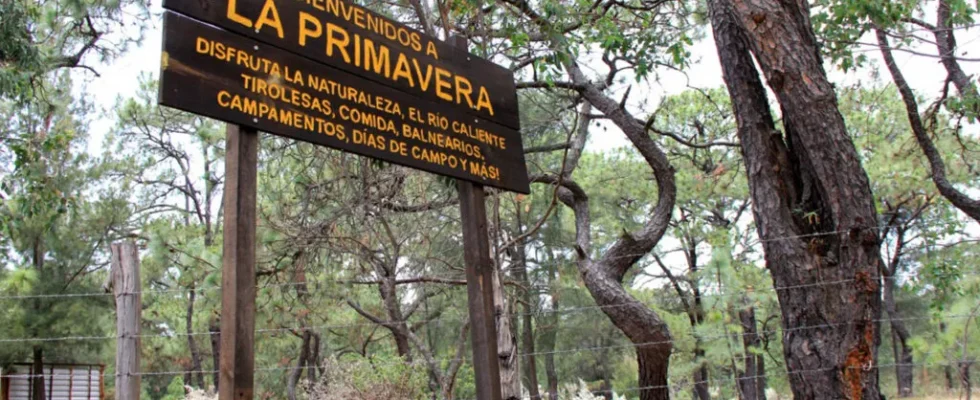
La Primavera Forest, on Guadalajara’s western edge, starts about six kilometers (four miles) past the Periférico ring road, out along Avenida Mariano Otero. It is so close that many people in Guadalajara treat it like another city park. It isn’t. The protected area covers roughly 30,500 hectares (about 75,000 acres) of pine and oak over a volcanic caldera, spread across Zapopan, Tala, El Arenal and Tlajomulco, with dozens of entry points and almost no services inside.
So the question of how to get to La Primavera Forest from Guadalajara has more than one answer, and it depends on what you want to do there. For hiking or mountain biking, use the Mariano Otero entrance. For a soak in the hot springs of Río Caliente, go in from the village of La Primavera, on the other side, off the highway to Nogales. Below are both routes, the main trails, the rules and what to pack.
Getting to La Primavera Forest in Guadalajara: which entrance to use
| If you want to… | Entrance | From Guadalajara |
|---|---|---|
| Hike, run or ride a mountain bike | Caseta 1, Mariano Otero | West on Av. Mariano Otero, about 6 km (4 mi) past the Periférico |
| Bathe in Río Caliente | La Primavera village | Av. Vallarta and the highway to Nogales as far as La Venta del Astillero, then to the village and along a dirt road to the gate |
| Long bike rides on the south and west sides | Caseta 3 Mesa del Nopal, La Hiedra, Las Tinajitas, La Tecomata | Used mostly by cyclists; download your track before you go |
Via Mariano Otero (hiking and biking)
This is the entrance most locals use. Head west on Mariano Otero, cross the Periférico and keep going about six kilometers to the gate, where forest rangers check that nobody brings in dogs or alcohol. Some 2.6 kilometers farther on is Estación Estéfano, a private parking lot with restrooms and showers. From there most people continue on foot or by bike to Check Point, a cabin with a small café in the middle of the best-known routes.
Opening hours, and the cutoff time for cars, are set gate by gate by the agency that manages the forest, and they change during holiday periods. Check the official channels of the OPD Bosque La Primavera before you head out instead of relying on hours you read elsewhere.
Via La Primavera village (Río Caliente)
Take Avenida Vallarta toward the exit for Tepic and stay on the highway to Nogales until La Venta del Astillero. Turn off there for the village of La Primavera, drive through it and follow the dirt road that ends at the gate for the Río Caliente area. The last stretch is earth and loose rock. A car with some ground clearance handles it better, especially after rain.
Río Caliente, practical notes: there is an entry fee, paid in cash at the gate, so bring pesos · there are no shops inside: carry water, food and a bag for your trash · soap, sunscreen and tanning lotion are not allowed in the river · hours shift during school vacations, so check the managing agency’s social media before you go.
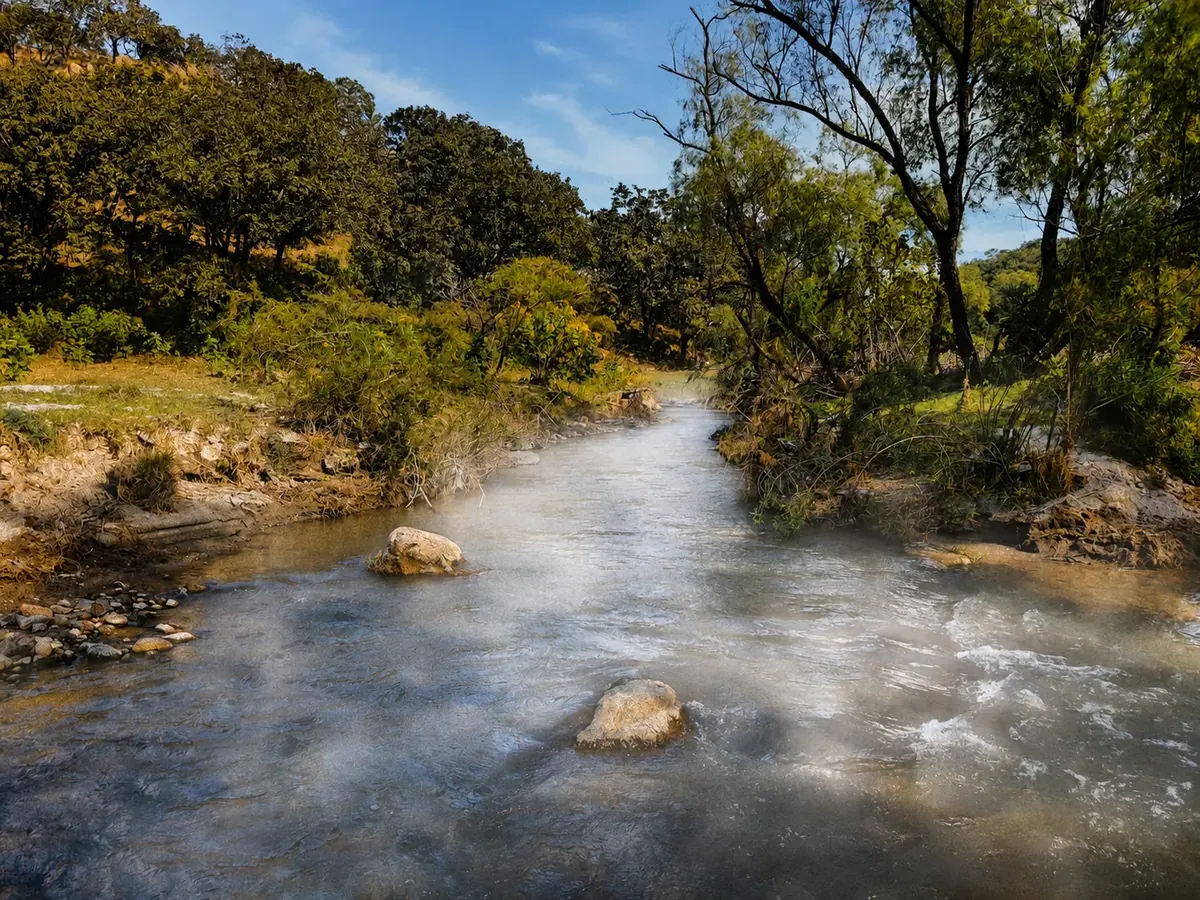
Río Caliente: the forest’s hot river
The heat comes from below. La Primavera is one of the youngest volcanic landforms in Mexico, and steam rising from underground warms the springs that feed the river. Where the water surfaces it can top 70 °C (158 °F); as it mixes with the stream it cools to something you can sit in. On December and January mornings the river steams, and that is when the crowds show up.
Most people stay close to the entrance, where the water is hottest. Walk a few minutes upstream or downstream and you’ll find quieter pools. Test the water with your hand before getting in, because some stretches will scald you, and keep away from the spots where steam vents.
Something few visitors hear about: those streams hold species adapted to that temperature, which the head of the forest’s managing agency has described as unique on the planet. Soap, sunscreen and food scraps harm them, and that’s why they’re banned.
Trails for hiking and riding
La Primavera isn’t a single trail. It’s a huge web of paths shared by hikers and mountain bikers. For a first visit, start with these:
- Río Caliente. The best-known walk, easy and flat for much of the way, out to the hot pools.
- Mesa del Nejahuete. Climbs from the Mariano Otero side to a plateau at 2,110 meters (about 6,900 feet), toward Torre Dos. Moderate, with some of the best views in the forest.
- Camino Central. The main track across the forest. Wide, easy to follow and handy for building your own loop.
- Mountain bike routes. La Mosca, Garrison, Toboganes, Espinazo del Diablo and the Torre 1, 2 and 3 routes get mentioned most. Mosca is a 2.3 km climb that links to Garrison, a descent of about 2.5 km that riders have used since the 1980s.
We keep a longer list, with tracks and difficulty levels, in our guide to hiking near Guadalajara. Cell signal drops inside the forest, so download your route before you leave and tell someone where you’ll be.
If you’re riding: helmet and gloves are required · stick to marked routes · don’t cut new shortcuts, they erode the soil · thousands of riders come in every weekend, so slow down on shared descents.
Related reading: Hiking near Guadalajara, with tracks and difficulty | The best parks in Guadalajara, for a walk without leaving the city
Looking after the forest: trash, fire and what not to do
This forest supplies water to the city. It is estimated to capture some 240 million cubic meters of rain a year, which recharges the Atemajac, Tesistán and Toluquilla aquifers. White-tailed deer, coyotes, bobcats and pumas live here; the puma has been recorded again in recent decades. All of that depends on how visitors behave.
Trash is the first problem. People who have gone to Río Caliente for years notice it: an entrance that used to be clean now has bags, cans and diapers lying around. There aren’t bins on every corner and no truck comes by to collect. The rule is simple and has no exceptions. Whatever you bring in, you carry out, peels and cigarette butts included.
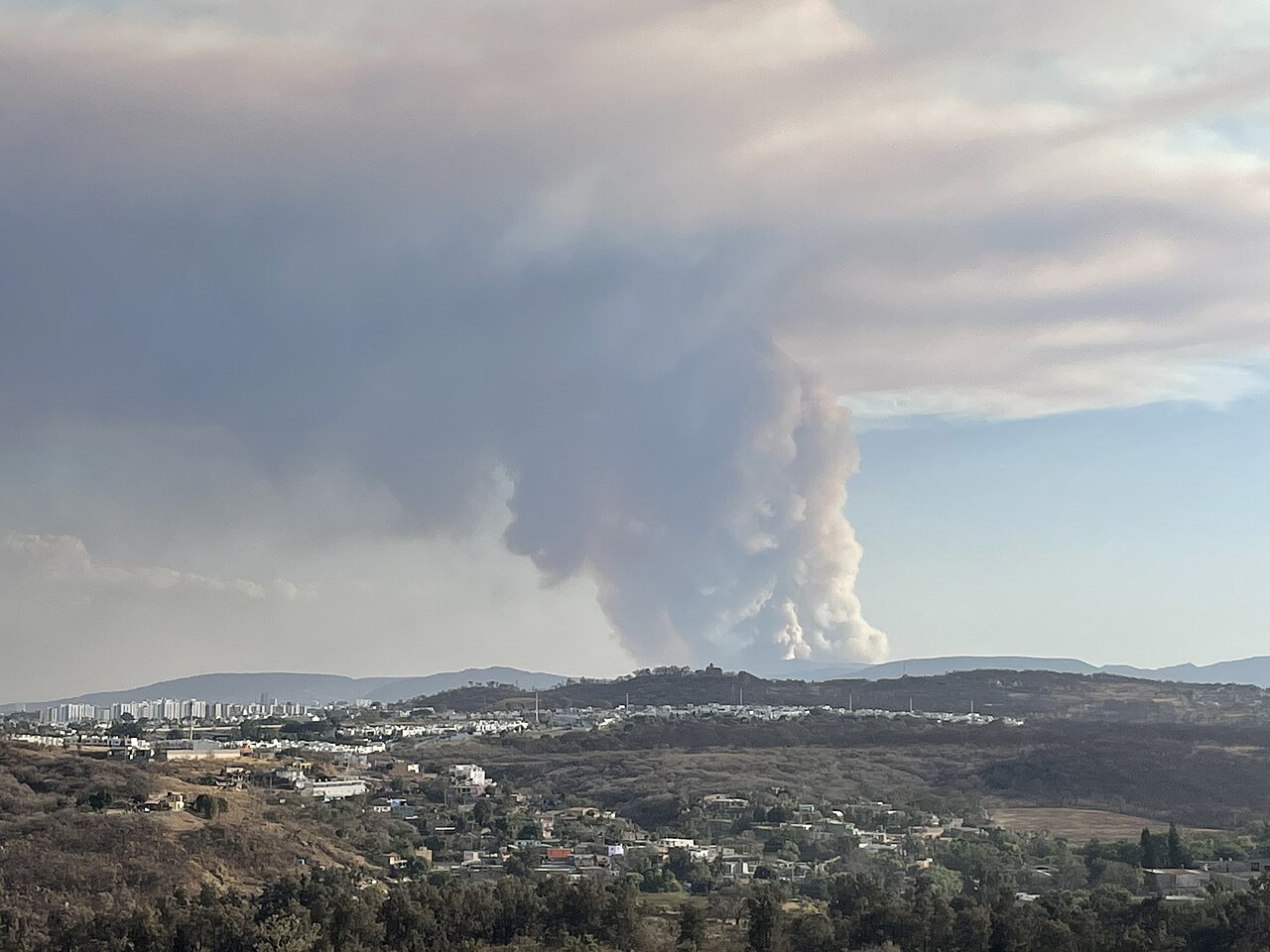
Fire is the second problem, and the more serious one. More than 95% of wildfires are started by people, through carelessness or on purpose. In 2005 close to 8,000 hectares burned and the city declared an environmental emergency. In May 2019, 47 fires affected 1,412 hectares. Almost every dry season the smoke can be seen again from Zapopan.
Fire of any kind is banned inside the forest: campfires, grills, braziers, camp stoves. Don’t drop cigarette butts or glass either, since glass in the sun can ignite dry leaves. If you see smoke, move away and call 911. Don’t try to put it out yourself.
Forest rules: no fire of any kind · no dogs, cats or other pets · no motorcycles or ATVs · no glass containers or alcoholic drinks · park only in marked areas and drive no faster than 25 km/h (15 mph) · don’t take plants, rocks, firewood or animals · respect private land: more than half of the forest belongs to private owners or ejidos.
When to go and what to bring
Winter and the dry season are the best time to hike: the paths are firm and Río Caliente feels better when the air is cold. Weekdays are far less crowded. On long weekends and during Holy Week the forest gets tens of thousands of visitors.
Start early. By mid-morning the sun is strong even if the city woke up cool, and getting back in daylight matters because there’s no lighting inside the forest.
What to bring: plenty of water · cash in pesos for fees and parking · closed shoes with good grip · a cap and sun protection (for use away from the river) · a towel and a change of clothes if you’re going to Río Caliente · food that leaves no waste · a power bank and an offline map · a bag to carry your trash home.
To turn the outing into a weekend, have a look at our list of glamping near Guadalajara. And for more forest with a few days to spare, Tapalpa is still the classic getaway.
La Primavera Forest FAQ
How much does it cost to get into La Primavera Forest?
It depends on the entrance. The Río Caliente area charges an entry fee in cash at the gate. On the Mariano Otero side, what you pay for is the private parking lot if you leave your car there.
Can I get there by public transportation?
Buses reach the villages around the forest, but not the trailheads or the river. For most visitors a car, your own, a rental or a shared ride, is the practical option.
Can I bring my dog?
No. The rules ban pets because they disturb the wildlife.
Can I camp or have a cookout?
No cookouts: fire is banned throughout the forest, grills and braziers included. Some private and ejido properties have their own camping areas; ask about their rules before you go.
How hot is Río Caliente?
At the springs the water tops 70 °C (158 °F). In the pools where people bathe it is much milder, though near the entrance there are stretches that will burn. Always test before you get in.
More getaways near Guadalajara: Hiking near Guadalajara | Glamping near Guadalajara | Lake Chapala from Guadalajara | Tapalpa, Jalisco