


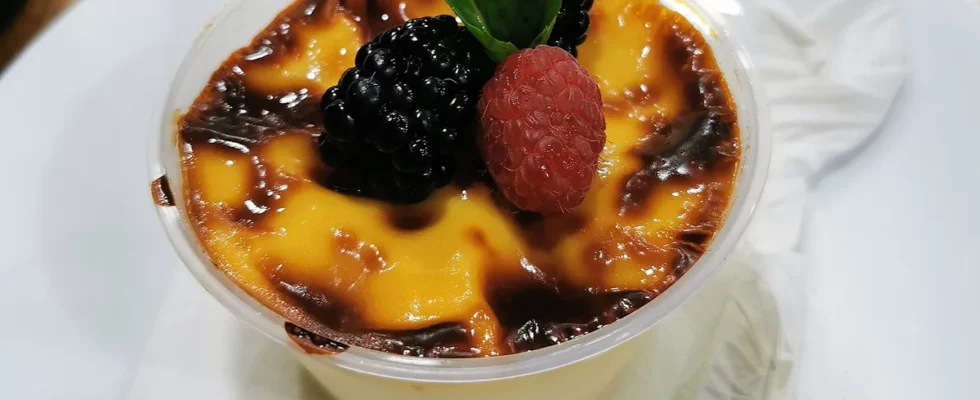
Jericalla is the dessert that closes almost any meal in Guadalajara: a baked custard of milk, egg yolks, cinnamon and vanilla, cooked until the top browns in dark patches. It is served cold, usually in a small cup or an individual ramekin, and it is cheap. You will find it on the ground floor of a market and on the menu of a Jalisco restaurant alike, and plenty of local families still make it at home from a grandmother’s recipe.
Below: what it is exactly, the story that ties it to the Hospicio Cabañas, how to tell it apart from flan and crème brûlée, the classic recipe, and where to eat jericalla in Guadalajara.
Jericalla at a glance
What it is: a baked dessert of milk, egg yolks, sugar, cinnamon and vanilla, with a browned top
How it is served: cold, in the same dish it was baked in; it is never unmolded
Origin, according to tradition: the Hospicio Cabañas, in the early 1800s
Where to find it: markets, bakeries, corner stores, birria and torta ahogada spots, and restaurants serving Guadalajara cooking
Also spelled: jericaya
What is jericalla?
It is an egg and milk custard set in the oven, a close relative of natillas and flan. What makes it different is the finish. The mixture bakes in a water bath, and at the end it goes under high heat from above so the skin on the surface scorches in brown, almost black patches near the edges. That thin, slightly bitter crust plays against a soft interior that tastes of cinnamon.
Texture varies a lot from one kitchen to the next. Some jericallas are firm and cut cleanly with a spoon, like flan; others are almost creamy and wobble when you move the cup. Market versions tend to come in plastic or foam cups. Restaurants use clay cazuelitas or ramekins, sometimes with fruit on top.
The origin of jericalla and the Hospicio Cabañas
No dated source records who made the first jericalla. What exists is an oral tradition, repeated by generations of tapatíos, that places the dessert at the Hospicio Cabañas, the charity house Bishop Juan Cruz Ruiz de Cabañas y Crespo founded for orphans, the elderly and the destitute. The building, designed by Manuel Tolsá, went up starting in 1805 and opened in 1810 as the Casa de la Caridad y Misericordia.
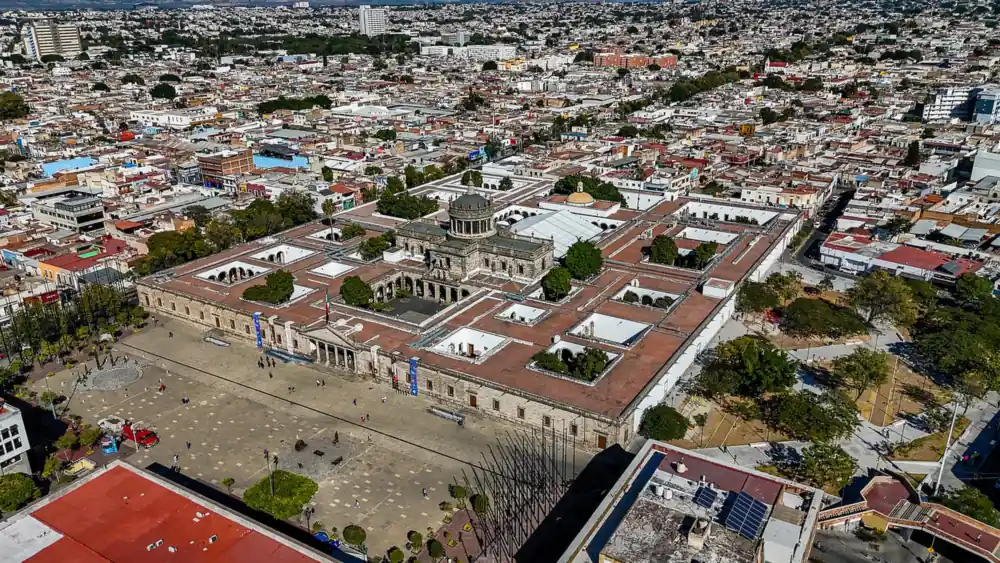
As the story goes, one of the nuns who cared for the children wanted something cheap and nourishing made from what the kitchen had on hand: milk, eggs and sugar. She made a custard, left it in the oven too long and the top burned. The children ate it anyway and asked for more. There are two explanations for the name. One says the nun came from Jérica, a town in Castellón, Spain, and the dessert was “the one from the woman from Jérica.” The other traces it to jícara, the gourd bowl it was served in. Neither has been proven.
Legend or not, the connection stuck. The Hospicio is now the Museo Cabañas, a UNESCO World Heritage Site since 1997 for José Clemente Orozco’s murals, and jericalla is still the dessert people in Guadalajara put on the table without a second thought. If you plan to visit the building, our Hospicio Cabañas guide covers hours, tickets and how to get there.
Related reading: Hospicio Cabañas: hours, tickets and the Orozco murals | Downtown Guadalajara: what to do around Plaza Tapatía
Jericalla vs. flan vs. crème brûlée
All three are baked egg custards, which is why people mix them up. The differences come down to the ingredients and to what happens on top.
| Jericalla | Flan | Crème brûlée | |
|---|---|---|---|
| Base | Milk | Milk (sometimes condensed and evaporated) | Heavy cream |
| Eggs | Mostly yolks | Whole eggs | Yolks |
| Flavor | Cinnamon and vanilla | Vanilla | Vanilla |
| Top | The custard itself, browned in the oven | Liquid caramel, which ends up on top when unmolded | A hard, crackly layer of burnt sugar |
| Served | Cold, in its dish | Unmolded | In its dish, freshly torched |
The quick test: if the browned layer is sugar that cracks, it is crème brûlée. If caramel runs down the sides, it is flan. If the crust is the custard itself, toasted, and it smells of cinnamon, you have a jericalla.
Where to eat jericalla in Guadalajara
Jericalla has no famous house that owns it, the way torta ahogada or birria do. It is everywhere, and the best one is often made by someone down the street. These are the places where you can count on finding it.
Mercado San Juan de Dios
On the ground floor of the Mercado Libertad, among the traditional candy stalls, jericallas sit next to cocadas, ate fruit paste and borrachitos. Upstairs in the food court, many fondas offer it as dessert. Eating one after a bowl of birria or carne en su jugo is about as local as it gets, and the market is a short walk from the Hospicio Cabañas. Our San Juan de Dios Market guide explains what is on each floor. Bring cash.
Birria spots, torta ahogada stands and cenadurías
Places serving traditional Guadalajara food nearly always keep it in the fridge by the counter, since it is the natural follow-up to a spicy plate. Ask for it when you get the check at birria restaurants, at torta ahogada stands and at the cenadurías that serve pozole and enchiladas. It turns up on the highway too: on the way to Lake Chapala, Los Milagros de Dalila lists it among its desserts.
Bakeries and corner stores
Traditional bakeries and pastry shops around Guadalajara sell single jericallas to go, and in many neighborhoods the corner store has a fridge stocked with jericallas a neighbor made. Those, unbranded and topped with a plastic lid, are often the best ones. They work for bringing to a get-together or as an afternoon snack.
Restaurants serving Jalisco cooking
Restaurants focused on regional food put it on the dessert menu, sometimes with a chef’s twist: berries, cajeta, a scoop of hand-churned nieve de garrafa, or served in a Tonalá clay dish. If a menu also lists tejuino or carne en su jugo, order the jericalla.
Related reading: San Juan de Dios Market: a floor-by-floor guide | Tejuino in Guadalajara: what it is and where to get the best
Classic jericalla recipe
This is the home version most common in Guadalajara. It makes eight servings in ramekins or small ovenproof cups of about 150 ml (5 oz).
Ingredients
1 liter (about 4 cups) whole milk
1 cinnamon stick
1 teaspoon vanilla extract
6 egg yolks
180 to 200 g (about 1 cup) sugar
- Simmer the milk with the cinnamon over low heat for about 10 minutes. Take it off the heat, remove the cinnamon, add the vanilla and let it cool until warm.
- Whisk the yolks with the sugar just until combined, without making foam.
- Pour the warm milk over the yolks a little at a time, stirring constantly, then strain the mixture.
- Divide it among the dishes and bake in a water bath at 180 °C (350 °F) for 35 to 45 minutes, until the center barely jiggles.
- Move the dishes to the top rack under the broiler, or use a kitchen torch, until the surface shows brown spots. Watch closely: it only takes a few minutes.
- Let them cool, then refrigerate for at least four hours. Jericalla is eaten cold.
Two details separate a good jericalla from a watery one. The milk should not go into the yolks boiling hot, or they will cook into lumps. And the water bath should never boil, or the custard fills with bubbles.
More Guadalajara food: Jalisco food | Tortas ahogadas in Guadalajara | Carne en su jugo
Jericalla FAQ
Is it spelled jericalla or jericaya?
Both are used. In Guadalajara, jericalla with a double L is far more common.
Is jericalla eaten hot or cold?
Cold. Straight out of the oven it is too loose; it needs hours in the fridge to set.
How long does jericalla keep?
Covered and refrigerated, two to three days. Do not leave it out for more than a couple of hours, since it contains milk and eggs.
Does jericalla have caramel?
No. The dark layer on top is the custard itself, toasted. If it comes with caramel, it is something else.